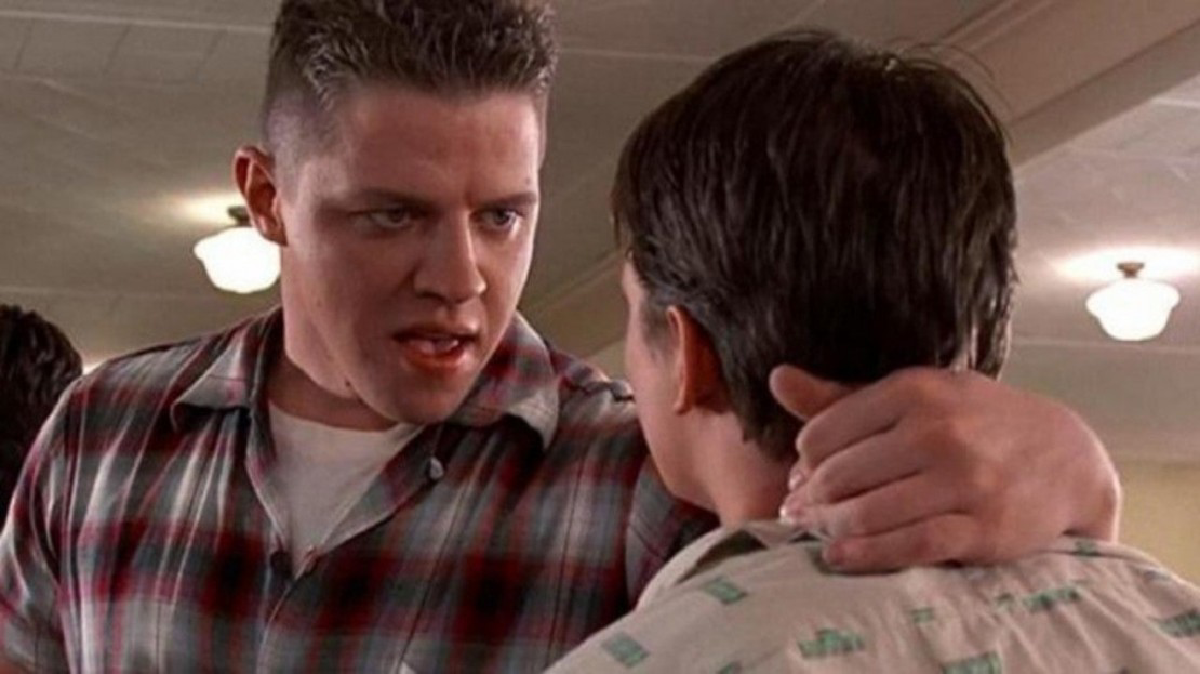
Here are some shot sizes that we learned last week.
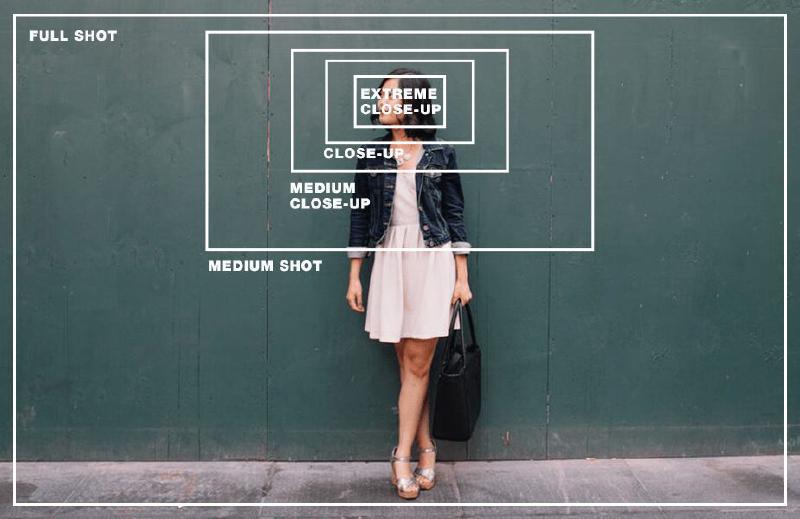
- Shots where the camera does not move are called static shots.
Static shots#
We learned about these shots last lesson.
- Close-Up (CU) – Face or object fills the frame; highlights emotion or detail.
- Extreme Close-Up (ECU) – Isolates a small detail (e.g., eyes, lips).
- Two-Shot – Frames two subjects together.
- Over-the-Shoulder (OTS) – Shot from behind one subject, focusing on another.
- Establishing Shot – Sets the scene/location at the start.
- Medium Shot (MS) – Waist up; emphasizes body language.
Shot names can be combined to describe the size and the type of shot. For example this shot is a medium shot and a two shot so we can say: a medium two shot.
Here some more common shots:
- Extreme Wide Shot (EWS) – Shows vast surroundings; subject is small or not visible.
- Wide Shot (WS) – Frames the subject fully within their environment.
- Full Shot (FS) – Captures the subject head-to-toe.
- Medium Wide Shot (MWS) / Cowboy Shot – Frames from mid-thigh up.
- Medium Close-Up (MCU) – Chest/shoulders up; focuses on facial expressions.
- Point-of-View (POV) – Represents what a character sees.
Shots where the camera moves are called travelling shots.
Shots can be a combination of different shots.
- For example an establishing shot is also either a static or travelling shot and is also often a wide shot.
Travelling shots#
The camera can move in different ways in travelling shots.
The camera can:
- zoom in or out.
- The camera does not move but the lens does.
- tilt up or down.
- pan left or right.
- dolly in or out.
- The camera moves to follow the action.
- zoom in or out.
The camera does not move but the lens does.
- Zoom shot – Lens adjusts focal length.
- Tilt – Vertical pivot on a fixed spot.
- Pan – Horizontal pivot on a fixed spot.
We can use these as verbs:
- zoom in or out.
- tilt up or down.
- pan left or right.
The camera moves to follow the action.
Dolly shot – Camera moves smoothly on tracks.
Tracking shot – Follows a subject horizontally.
- dolly in or out.
- track left or right
- track the main character
Steadicam shot – Smooth handheld movement.
Handheld shot – Raw, shaky movement.
shots#
quick zoom out:
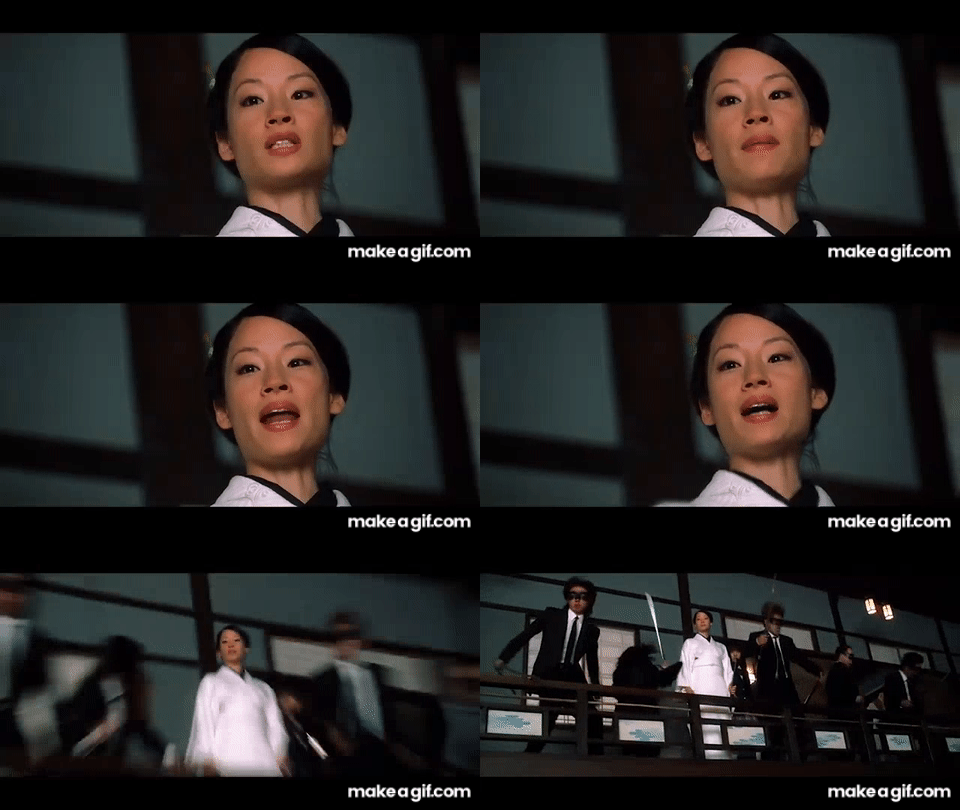
tracking shot:
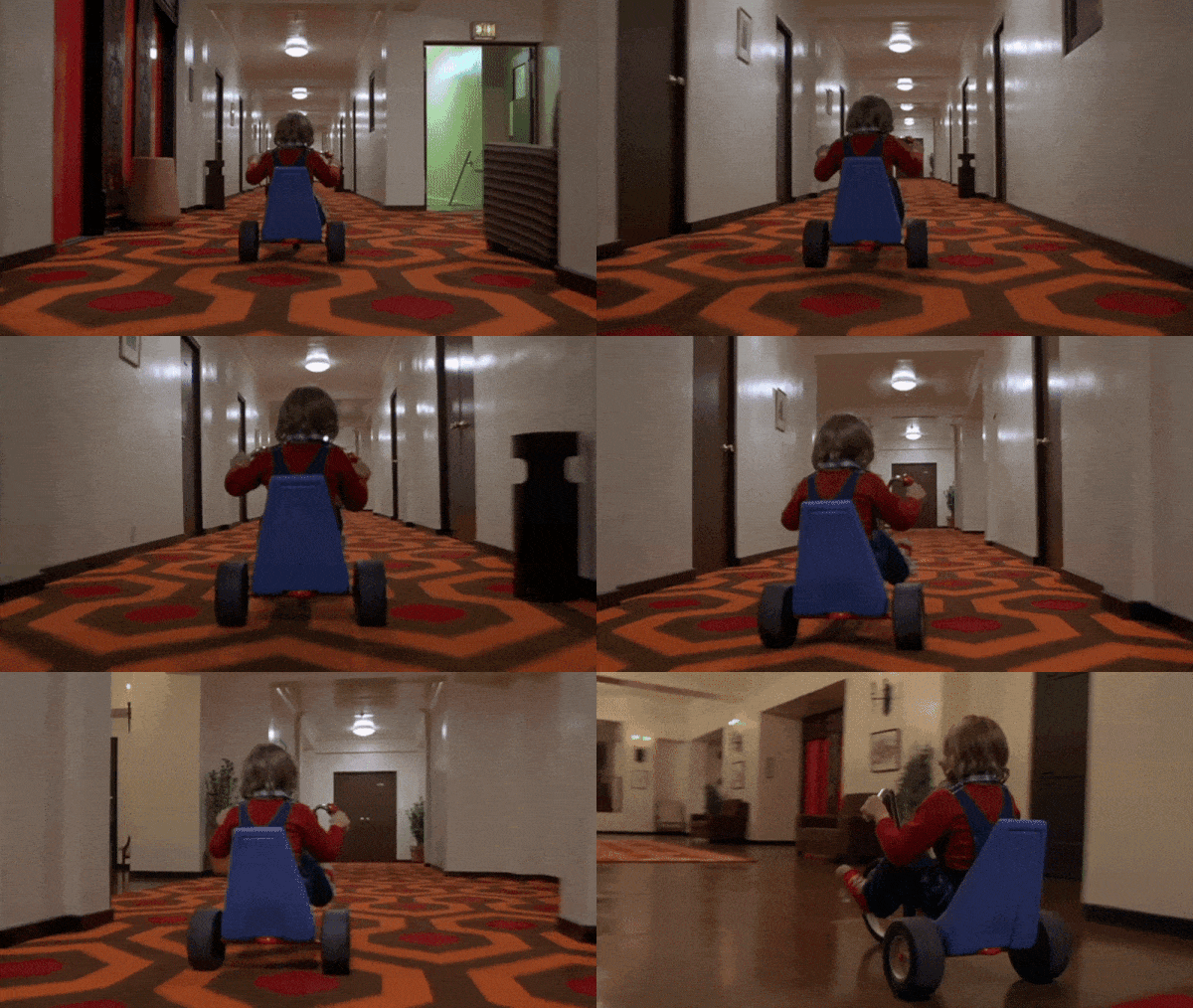
slow zoom in:
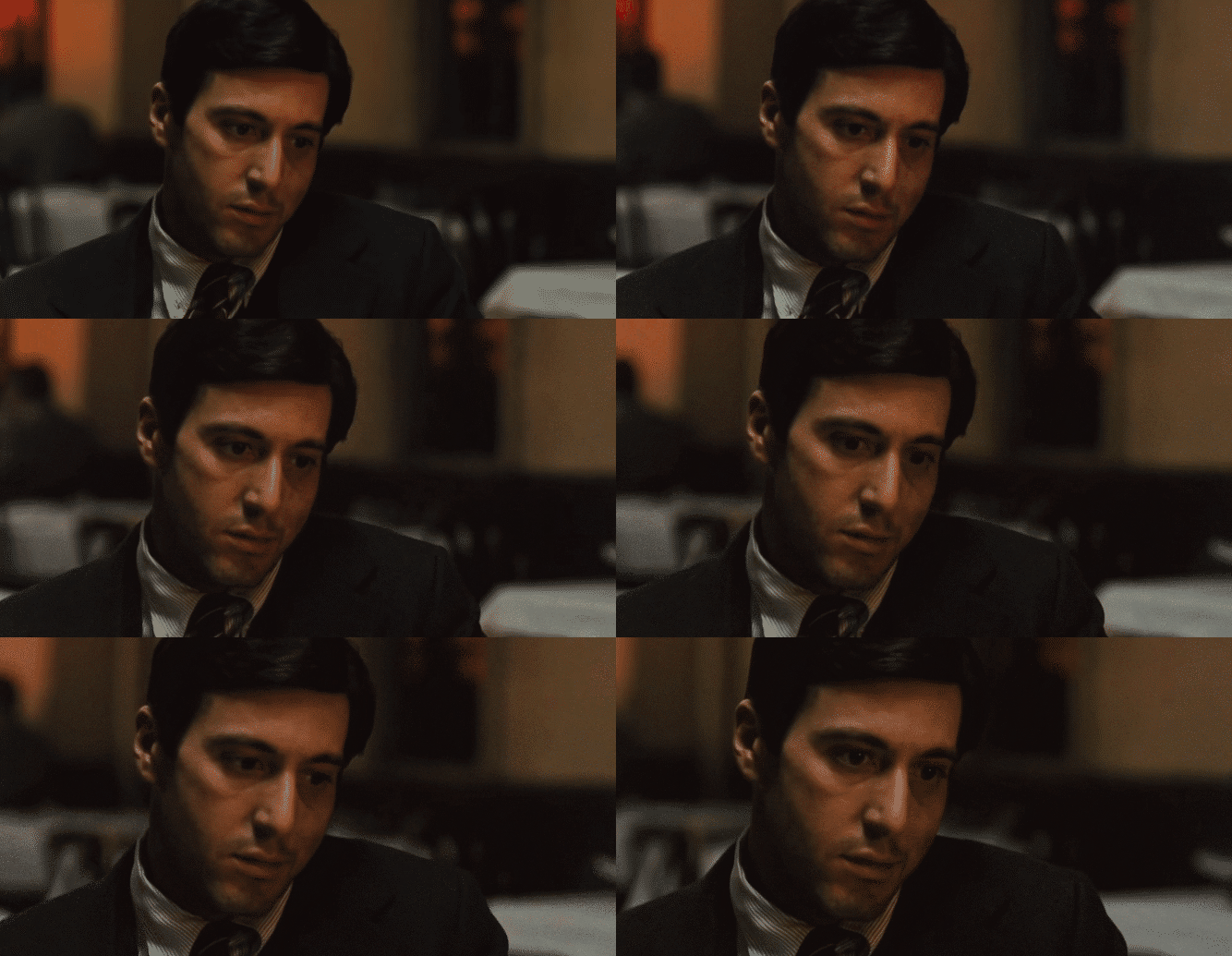
tilt up:
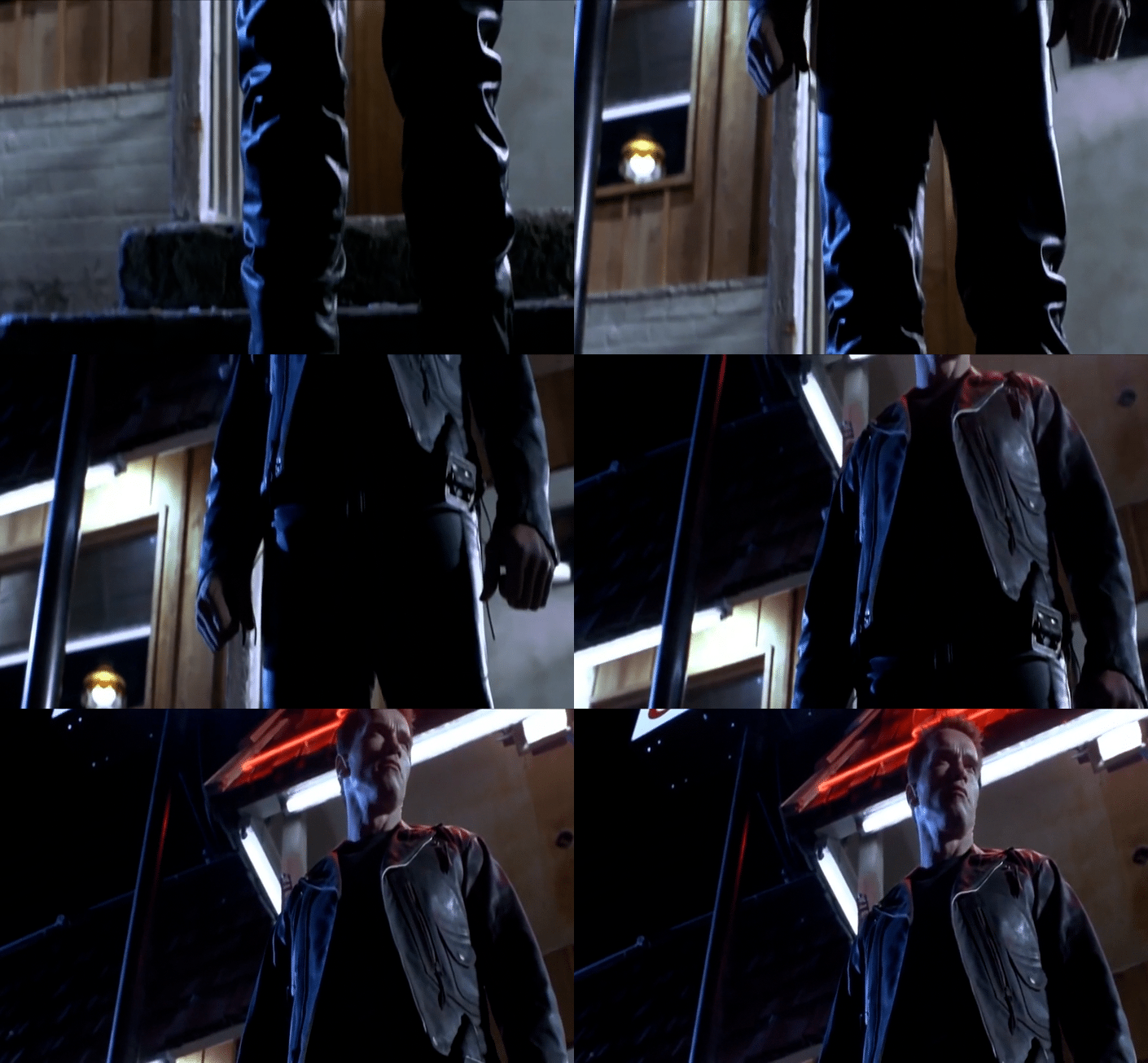
pan:
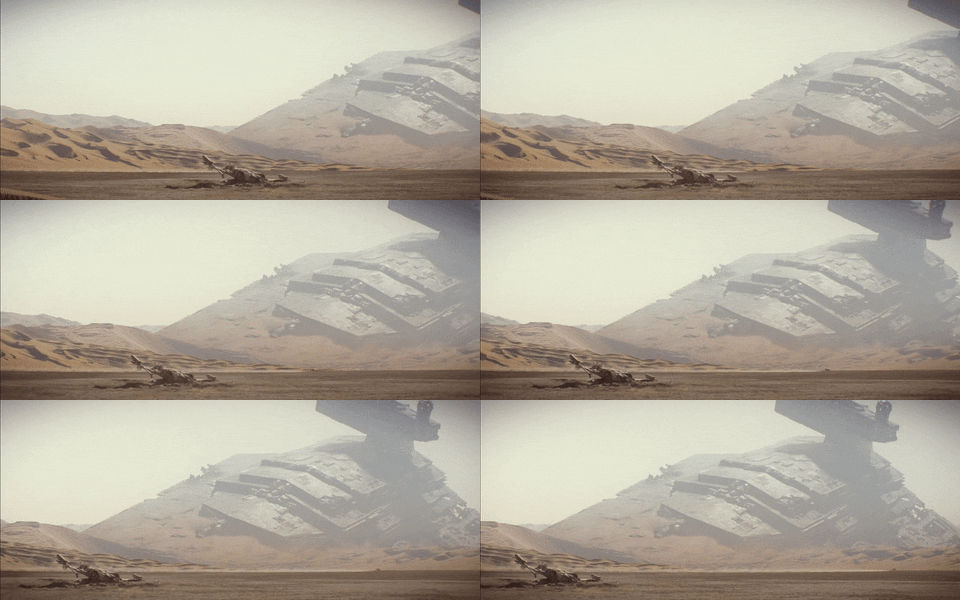
quick pan:

handheld:
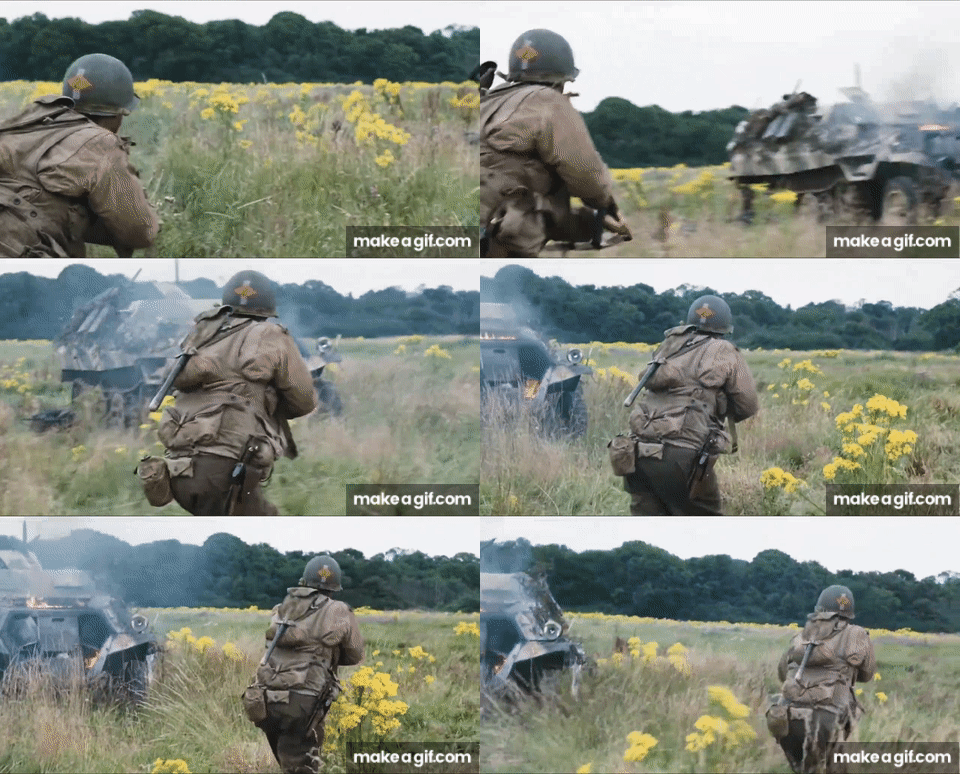
Form and meaning#
In painting, photography and films form e.g. composition, colour, size show meaning.
In film, the choice of shot is an important way to help tell a story.
For example, a wide long shot can show that a character is lonely. A quick zoom in to an extreme close up can show shock or excitement.
Here are some phrases to describe how shots help to tell the story.
Make your own sentences.
| express | the relationship between the characters. | |||
|---|---|---|---|---|
| show | excitement. | |||
| The shot helps to | convey | the characters anger. | ||
| communicate | the tension between the characters. | |||
| express | the danger of the situation | |||
| intensify | the characters loneliness. |
- Useful nouns:
| confusion | 混乱 | こんらん |
|---|---|---|
| loneliness | 孤独 | こどく |
| frustration | 欲求不満 | よっきゅうふまん |
| fear | 恐怖 | きょうふ |
| love | 愛 | あい |
| anger | 怒り | いかり |
| resolve | 決意 | けつい |
| power | 力 | ちから |
| weakness | 弱さ | よわさ |
| bravery | 勇気 | ゆうき |
| cowardice | 臆病 | おくびょう |
| foolishness | 愚かさ | おろかさ |
| wisdom | 知恵 | ちえ |
| intelligence | 知能 | ちのう |
| transformation | 変身 | へんしん |
| anguish | 苦悩 | くのう |