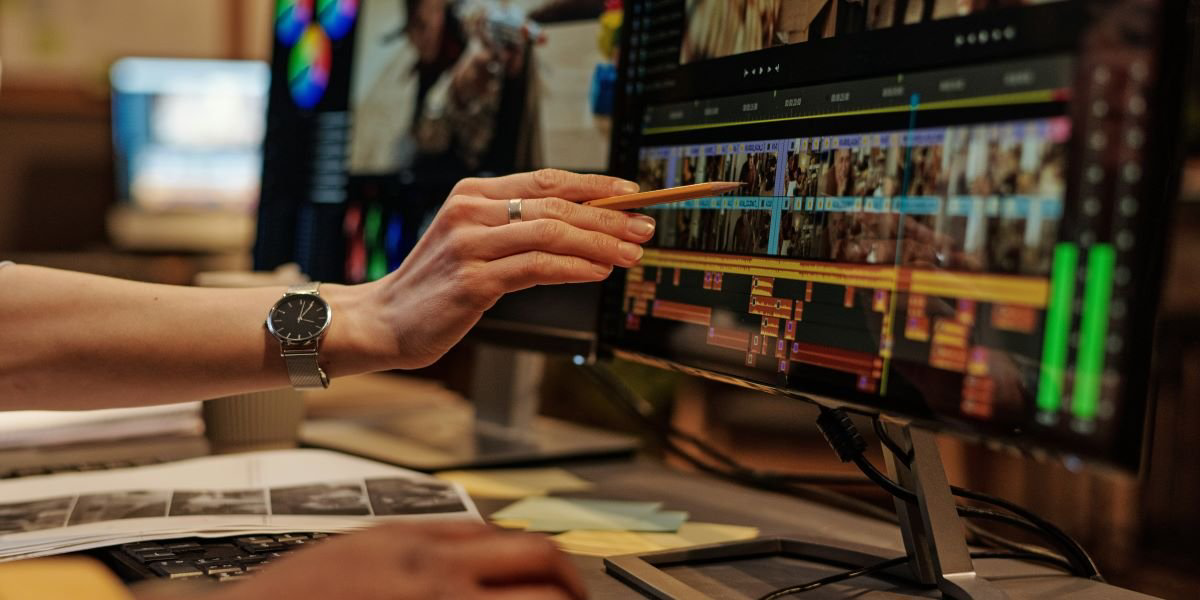
Editing
#- Film makers put the film together with the editor.
- They choose how to arrange the shots they have taken.
- They arrange the audio.
- They add music and special effects.
- Editing is now one on computer but was originally done by hand and so uses language from when editing was done by hand.
Watch this video about film transitions
#Think about how you can use transitions to help tell your story in your film.
#The transitions
#- cut
- An instant switch or transition from one shot to another / scene
- fade
- A shot dissolves to or from a solid colour
- Fade to black often ends a film / can signal the end of a chapter.
- Fade to white - often used to signify shifting to a dream.
- dissolve
- Dissolve gradually changes to another shot.
- Can suggest a longer passage of time, memory or a dream.
- match cut
- Any transition that matches elements from the previous scene to match the next.
- iris
- Like a fade but ends or begins with a small circle.
- wipe
- Shot A is replaced by shot B from a specific direction
- Can give a retro feel.
- passing transition
- Uses a moving character or object to change to the next scene or a moving camera to move to the next scene.
- whip pan
- A quick pan used to change scene.
- smash cut
- A sudden cut that suddenly contrasts visual images or sound to shock the viewer.
- J-cut and L-cuts
- A change of shot or scene where sound and visuals overlap.
Talk to other members of your group. How coud you use some of these transitions in your film to tell your story better?
#